mercoledì 2 marzo 2011

Ten Places to Visit in Northern Ireland

Ulster American Folk Park
The Ulster American Folk Park would be a very nice place to visit because there is a lot to look at. Immerse yourself in the world’s famous story of Irish emigration at the museum that brings it to life. Follow the emigrant trail as you journey from the thatched cottages of Ulster, on board a full scale emigrant sailing ship leading to the log cabins of the American frontier. Meet costumed characters on your way with traditional crafts to show, tales t tell and food to share. Celebrate the "American Wake".


Countless thousands of people left Ireland in the 1700s and 1800s. For many, the hours before departure became known as the American or Living Wake. The Ulster American Folk Park is home to wide variety historic buildings from throughout Ulster.

They include a simple cabin whose origins pre-date the Great Famine; an 18th century Mass House; a National School from 1845; and, the historically significant Mellon House, childhood home of Thomas Mellon, founder of the Mellon Bank in United States of America. The buildings in this collection reflect over two hundred years of social and economic change in this part of Ireland.


Giant’s Causeway


Giants Causeway would be a very nice place to visit and if you go on the walk in the Giants Causeway there are a lot of rocks and there is one shaped like a boot. The Giant’s Causeway consists of 40,000 polygonal basalt columns, some 6ft in height, and all side-by-side and is explored by 350,000 visitors yearly.

Basalt columsns at the Giant's Causeway

Among the many theories and local legends, the most scientific reason for these formations is that about 55 million years ago during the early. Tertiary period lava flowed from a nearby volcano and settled on the shore and there is a mountain. I think it is a very nice place in Northern Ireland.


The Giant’s Causeway is open from the 1st March to the 31st May at 9.30am to 5.00pm, 1st June to 30th June at 9.30am to 6.00pm, 1st July to 31st August at 9.30am to 7.00pm, 1st September to 30th September 9.30am to 6.00pm, 1st October to 31st October 9.30am to 5.00pm, 1st November to 31st  December 9.30am to 4.00pm. If you go in by car it is £6 and by motorbike it is £2.


The Ulster Museum, Belfast

The Ulster museum was made in 1988 and reopened in 2008. The mummy is the most famous thing in the museum. She died at the age of 30.Her name is Takabuti. The mummy was unwrapped in 1835. She died at the age of 30.Her name is Takabuti.
There is a cafe and there is a restaurant at the front of the museum.
Peter, Polar bear died in August 1972 he is famous because he was the first polar bear to live in Belfast for a while.
If you are blind, guide dogs are welcome. 


Information
Opening times: 10.00 / 17.00
But it is closed on Mondays [besides bank holidays]
Price: free to get in.


The Marble Arch Caves


The Marble Arch Caves is in the Global Geopark and is located in of counties Fermanagh and Cavan. It boasts some of the finest natural landscapes in Ireland and offers a window into the area's 650 million year past.


A Geopark is an area recognised by UNESCO (the United Nations Educational, Scientific and Cultural Organisation) to have exceptional geological heritage.

The caves were first explored by Édouard-Alfred Martel and Dublin naturalist Lyster Jameson in 1895, starting at the Cladagh Glen resurgence, already a popular tourist attraction.  Using a canvas boat, and with candles and magnesium flares for light, Martel and Jameson found 1,000 feet (305 m) of passages, including the junction where the Owenbrean and the combined Aghinrawn and Sruh Croppa waters meet. In 1908 and later in 1935, groups of English cavers from Yorkshire Ramblers' Club explored further and discovered more chambers, the latter group reaching the limit of today's show cave. In the late sixties a major breakthrough was made when a bypass to sump 1 was found, giving access to the Legnabrocky Way and Skreen Hill 2 and Skreen Hill 3 sections of the cave. A notable feature of the Legnabrocky Way is the Giant's Hall, a large chamber 60 m long, 30 m high and 15 m wide.

In 2009 and 2010 diving connections were made to the nearby cave systems by Artur Kozlowski, firstly to Prod's Pot – Cascades Rising, doubling the total length of the system from 4.5 to 9 km (5.6 mi), and subsequently to newly established Monastir Sink - Upper Cradle system , extending the system further to 11.5 km (7.1 mi). The discoveries make this the longest cave in Northern Ireland.


Cave Hill


Cave hill, one of the most familiar and visible landmarks of Belfast.

Cave Hill Country Park gets its name from five caves - which could be early iron mines - located on the side of the main Belfast cliffs.

Visitors to Cave Hill Country Park can enjoy panoramic views across Belfast City from vantage points on the hillside.

There are also way marked trails which are suitable for casual walkers or serious ramblers.

It’s great for taking your dog for a walk, learning more about nature or even having a family picnic on a sunny day. And lots and lots more.


There is also Cave Hill Adventurous Playground nearby.  It is located in the grounds of Belfast Castle Estate, just off Antrim Road in north Belfast.
It is suitable for children aged three to 14 and includes cradle swings, slides, spring rockers, a sand play unit and a bicycle roundabout.

Prices
Valid from 1 April 2010 to 31 March 2011:
• single admission - £2.10
• Season ticket - £37.50.


W5
WE HOPE YOU ENJOY OUR INFORMATION.


Opening hours
Monday - Friday 10am - 5pm, last admission 4pm
Saturday 10am - 6pm, last admission 5pm
Sunday 12pm - 6pm, last admission 5pm

W5 is  part of the Odyssey, Northern Ireland’s Landmark Millennium Project, based in the Abercorn Basin beside the River Lagan in Belfast. Upper floors of W5 have spectacular views of Belfast’s cityscape and far beyond.

With nearly 200 amazing interactive exhibits in four incredible areas, W5 provides a unique experience as well as fantastic fun for visitors of all ages. In addition to permanent exhibits, W5 also presents a changing programme of large and small scale temporary exhibits and events. We have a daily programme of live science demonstrations and shows throughout the day.

W5’s location, on the bank of the River Lagan, at Odyssey, the Northern Ireland Landmark Millennium Project, provides spectacular views of Belfast and the River and is only a short walk from Belfast City Centre.

W5 opened on the 31st March 2001. Over the past decade we have welcomed over 2 million visitors from around the world. W5 has become one of Northern Ireland's top visitor attractions winning many awards and the hearts of thousands of young people.

 There are lots of special events to enjoy. They have put together some of the most popular events and created some amazing stuff.


Belfast Castle


Belfast Castle occupies a prominent site on the slopes of Cave Hill, some 400 ft above sea level. This magnificent sandstone building, now managed by Belfast City Council, has close associations with the city’s past.

Its sense of history, the superb setting and the new, refurbished visitor centre makes Belfast Castle a ‘must’ for every visitor. Discover the history of Cave Hill from Stone Age to current times.
Public tours are held at various times throughout the year however a private tour can be arranged at any time (depending on numbers).


Belfast Zoo

Belfast Zoological Gardens is home to more than 140 species of animal, many of which are in danger in their naturalhabitat. The zoo also carries out important conservation work and takes part in over 90 European and global collaborative breeding programmes which help to ensure the survival of many species under threat.

As one of the oldest visitor attractions in Northern Ireland, many visitors have fond memories of visiting the gardens, which have been home to the animals since 1934. In 2010, Belfast Zoo is now one of the leading visitor attractions in Northern Ireland, with more than 304,000 visitors a year.


Popular attractions include the Asian elephants, giraffes, sea lions, penguins, ring-tailed lemurs, apes, monkeys, Malayan tapirs, Giant anteater, Malayan sun bears, Visayan warty pigs, Barbary lions and Sumatran tigers. Our rainforest exhibit creates an authentic immersive environment that combines tropical plants with unusal animals such as Jasmine, the Linne's two toes Sloth and Rodrigues fruit bats.

Other onsite facilities include the Ark Cafe, snack bar, 'Zoovenir Shop', children's playground and designated picnic areas. The zoo also runs a regular programme of special events through the year.
 
Queen’s University

The fine facade of the Main Building, designed by Charles Lanyon, conceals a quiet, restful quadrangle. This was the original Queens College: the University has expanded throughout the immediate area, including all the houses on University Square, the imposing terrace to the left of the Lanyon Building. The visitors centre host exhibitions as well as selling University memorabilia.


Wheelchair access. Guided tours available.

Belfast City Hall

The home of Belfast City Council,it was designed by Alfred Brumwell Thomas and built in Portland stone. Completed in 1906, it is a magnificent Edwardian 'wedding cake' built to reflect Belfast's city status, granted by Queen Victoria in 1888. The dome is 53m (173 feet) high. Figures above the door are 'Hibernia encouraging and promoting the Commerce and Arts of the City'.

Today, the grounds of City Hall are a favourite of city centre workers, students and tourists for taking a break from the bustling city. Many people can be found relaxing in the grounds with friends or simply a sandwich and a favourite book. The grounds are also used for many events from continental markets to open air concerts.


Stormont

Stormont housed Northern Irelands Parliament until it was disbanded in 1972. The interior floorspace totals nearly 5 acres and the building stands at the end of a mile long driveway in 300 acres of parkland.


Stormont is a public park which remains open until 7.30pm. Pedestrians can walk from the main gates to the statue of Carson, along the Prince of Wales Avenue and can also enjoy the glen walk and visit the excellent facOn 3 December 2005, the Great Hall was used for the funeral service of former Northern Ireland and Manchester United footballer George Best. The building was selected for the funeral as it is in the only grounds in Belfast suitable to accommodate the large number of members of the public who wished to attend the funeral. Approximately 25,000 people gathered in the grounds, with thousands more lining the route. It was the first time since World War II that the building has been used for a non-governmental or non-political purpose.


Carrickfergus castle

Carrick Fergus Castle greets all visitors with its strength and menace. It represents over 800 years of military might. Besieged in turn by the Scots, Irish, English and French, the Castle saw action right up to World War II.


Exhibitions on the castle’s history, audio-visual, shop, wheelchair access limited.


giovedì 17 febbraio 2011

Touring Bird from Ireland in Germany

Touring Bird from Ireland in Germany


Pupils from the FLEX-class have drawn the Irish Touring Bird. They had a lot of fun.
 
the same


The best class of the school competition was awarded the cake.


Little gifts for the best pupils.


The Irish Touring Bird is in the classroom.The pupils are very proudly.


Pupils get their certificates.


martedì 25 gennaio 2011

Villes Nord-Pas-de-Calais - France

Places to visit in Northern France


1. Vimy - Les tranchées

Vimy Ridge est le plus grand mémorial de France. Il se trouve dans la région Nord-Pas-de-Calais. C'est un territoire canadien. Il rend hommage aux soldats Canadiens qui sont  morts pendant la première guerre mondiale. Il commèmore les soldats dont on ne connaît pas l'idendité. Il fut construit en 1922. Une partie du champ de bataille a été préservée. Il présente des tranchées, des cratères liés aux bombardements et des munitions non explosées.


The Vimy Ridge Memorial is Canada's largest overseas war memorial. It is dedicated to the commemoration of the Battle of Vimy Ridge and Canadian Expeditionary Force members killed during the First World War. It serves as the place of commemoration for Canadian soldiers killed in France with no known grave. France granted Canada the use of a section of land at Vimy Ridge in 1922 for the purpose of a battlefield park and memorial. Some of the battlefield is preserved as part of the memorial park. The grounds of the site still contain wartime tunnels, trenches, craters and unexploded munitions.


2. Place d'Arras

La centre ville d'Arras a deux places principales : la Grande Place et la Place des Héros (La Petite Place). La ville a restauré des bâtiments comme l'hotel de ville Gothique (reconstruit dans un style un peu moins grandiose après la guerre) et la cathédrale du 19ème siècle. La cathédrale originelle, construite entre 1030 et 1396 a été l'un des plus beaux édifices gothiques du nord de la France. Le bâtiment original a été en partie détruit pendant la Révolution française.


The centre of the town of Arras is marked by two large squares, the Grande Place and the Place des Héros, also called the Petite Place. These are surrounded by buildings largely restored to their pre-war World War I conditions. Most notable are the Gothic town hall (rebuilt in a slightly less grandiose style after the war) and the 19th-century cathedral. The original cathedral of Arras, constructed between 1030 and 1396, was one of the most beautiful Gothic structures in northern France. It was partly destroyed during the French Revolution.


3. Le Beffroi de Béthune

Béthune est une jolie ville avec beaucoup de patrimoine historique. On peut y voir, entre autre, une belle place pavée, entourée de boutiques et de cafés et aussi un grand beffroi qui mesure 47m. On peut voir la frontière belge du sommet. Le carillon du beffroi est composé de trente-six cloches.


Béthune is a pleasant town rich in architectural heritage and history. It has among other things a beautiful paved square with shops and cafes and a 47 meter (133 steps) tall belfry standing in the center from the top of which the Belgian border can be seen. The chime of the belfry is composed of thirty-six bells.


4. Le Marais Audomarois - St-Omer

Saint-Omer est une commune et sous-préfecture du département du Pas-de-Calais. La ville a reçu son nome d'après Saint Audomar, qui a introduit le christianisme dans la région. La partie canalisée de la rivière Aa commence à Saint-Omer et elle atteint la mer du Nord à Gravelines. Aussi l'Aa se connecte avec le Canal Neufossé, qui se termine à la rivière Lys.


Saint-Omer is a commune and sub-prefecture of the Pas-de-Calais department. The town is named after Saint Audomar, who brought Christianity to the area. The canalised portion of the river Aa begins at Saint-Omer, reaching the North Sea at Gravelines. Below its walls, the Aa connects with the Neufossé Canal, which ends at the Lys River.


5. Lens - Le Louvre

Le Louvre-Lens est une partie du musée de Louvre à Paris. Il va ouvrir en 2012 dans la ville de Lens, dans le Nord de la France. Ce musée va présenter des oeuvres différentes originales et des écrans pour permettre un plus grand visitorat à la ville. Le nouveau musée présentera des œuvres de toutes époques confondues : ce sera la création d'une toute nouvelle expérience pour le spectateur. Le musée recevra entre 500 et 600 œuvres.


The Louvre-Lens is a branch museum of the Musée du Louvre, due to open in 2012 in the French city of Lens. Since many of the works at the Louvre in Paris are viewed only in distinct departments—for example, French Painting, Near Eastern Art or Sculpture, it was decided that a satellite building would be created outside of Paris, to experiment with other displays and to allow for a larger visitorship outside of the city. The new museum will show works side-by-side, cross-referenced and juxtaposed from all periods and cultures, creating an entirely new experience for the museum visitor.The building will be capable of receiving between 500 and 600 major works.


6. Lewarde - Musée de la Mine

Le plus grand musée de la mine en France vous invite à découvrir l'histoire de l'industrie charbonnière et de la vie quotidienne des mineurs dans le Nord / Pas-région de-Calais, avec une visite à travers ses galeries et ses expositions. C'est la mine Delloye à Lewarde, près de Douai, qui a été choisie comme site de ce musée en 1973 grâce au charme du lieu et à sa position au cœur de la zone minière. Cette mine a fonctionné de 1931 - 1971, et en moyenne elle employait 1.000 mineurs.


The biggest mining museum in France invites you to discover the history of coal-mining and the daily life of the miners in the Nord/Pas-de-Calais region, with a tour through its galleries and exhibitions. It was the Delloye Colliery in Lewarde, near Douai, which was chosen as the site of this museum in 1973 due to the charm of the place and its position at the heart of the mining area. This pit had in fact been in operation from 1931 - 1971, through the "battle for coal" period, and employed 1,000 miners on average.

7. Cambrai - Le musée Matisse

Le musée Matisse se situe à Cambrai, dans le nord de la France. Il affiche des peintures de Henri Matisse. Matisse lui-même a créé le musée en 1952. Il a défini la façon dont ses travaux devraient être organisées.
A cette époque, le musée était situé dans la salle de mariage de l'hôtel de ville à Le Cateau. Le musée a été déplacé vers le Palais Fénelon, à Cambrai, en 1982. Le Musée abrite maintenant la troisième plus grande collection des oeuvres de Matisse en France.


The Matisse Museum is a museum in Cambrai, north of France that primarily displays paintings by Henri Matisse. The museum was established by Matisse himself in 1952; he also defined the way his works should be arranged. At that time the museum was located in the wedding room of  Le Cateau City Hall. In 1956 the collection of the museum was enlarged by the gift of 65 paintings by Auguste Herbin. The Museum was moved to the Palais Fénelon, also in Cambrai, in 1982. The Museum now has the third largest collection of Matisse works in France


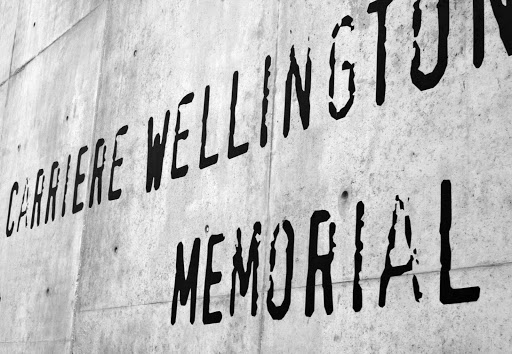
8. Arras - La Carrière Wellington

La Carrière Wellington est un musée situé à Arras. Il a ouvert en Mars 2008 et il commémore les soldats qui ont construit les tunnels avant la bataille d'Arras en 1917. Le musée "Carrière Wellington "est constitué d'un centre d'accueil qui présente des artefacts historiques ainsi que le contexte historique de la bataille d'Arras, y compris les travaux des tunneliers, la stratégie militaire et la construction des tunnels.
Les tunnels sont environ 22m sous-terre. Les visiteurs font une visite guidée le long de 350 m de tunnels pour voir des présentations audio-visuelles, divers aspects de la campagne et la vie que les soldats menaient dans les tunnels. On peut voir aussi des reliques comme des casques et des bouteilles etc


The Carrière Wellington is a museum in Arras. Opened in March 2008, the museum commemorates the soldiers who built the tunnels and fought in the Battle of Arras in 1917. The Carrière Wellington museum consists of a visitor centre displaying historic artifacts and presenting the historical context of the Battle of Arras, including the work of the tunnellers and the military strategy that underlay the tunnels' construction. The tunnels are accessed via a shaft that takes visitors approximately 22 m (70 ft) below ground. Visitors are taken on a guided tour along 350 m of tunnels to see audio-visual presentations of various aspects of the campaign and the soldiers who built and stayed in the tunnels. At various places, graffiti and painted signs can be seen, along with relics of the troops such as cans of bully beef, helmets and bottles.


9. Olhain Castle (a visit made by CP and CE1)


Mardi 19 octobre 2010, nous sommes partis en bus visiter le château d’Ohlain. Celui-ci fut construit en 1902, au Moyen Age. Il est parfaitement conservé.
               Un guide nous a montré les gargouilles en haut des tours, les étables, le moulin et la grange. Puis, nous avons traversé le pont-levis et nous avons pénétré dans la cour du château. Nous avons visité la salle des gardes et la tour observatoire qui protège le château.
               Ensuite, nous sommes descendus dans les caves où étaient entreposés les armes et la nourriture. Nous sommes montés dans le donjon et y avons vu des blasons, l’âtre et les crochets sur lesquels on pendait la viande.
               Nous sommes redescendus et avons visité le four à pain puis la chapelle. Enfin, nous sommes sortis du château et nous nous sommes promenés autour des douves. Le guide nous a expliqué qu’il existait un passage secret près du second pont-levis. Nous avons également vu l’arrière du château. Celui-ci est vraiment très beau. 
               Puis nous sommes rentrés à l’école en bus.

On Tuesday 19th October, we left school in the afternoon on the bus to visit Olhain Castle. We saw the Olhain, which is an old castle that was built in 1202, during the Middle Ages. It is still in very good condition.
            A guide showed us the gargoyles on top of the tower, the stables, the mill and the barn. Next, we went over the drawbridge which is above the moat, and we went into the castle courtyard. We saw the guard room and the watchtower that protects the castle. Then we went down into the basement which was used to store weapons and food. We went up into the dungeon. We saw the shields, the large fireplace and the ceiling hooks from which they use to hang meat. Next, we came back down and saw and we saw the bread oven and also the chapel.
            Finally, we left the castle to do a tour around the moat. The guide explained to us that there was a secret passage near the second drawbridge. We saw the back of the castle. The castle was really beautiful.
            Then we went back to school on the bus.

                           A view of the Castle

             Olhain Castle with the sun behind it

                The guide telling us about the Moat


                       Inside the Courtyard


A view from the main entrance to the Castle from inside the Courtyard

                                    10. Notre Dame de Lorette (une visite des CE2, CM1 et CM2)

Lundi 22 novembre 2010, nous sommes allés à Notre Dame de Lorette.
         Le site historique commémore les batailles de l'Artois, lors la première guerre mondiale.
         Nous y avons visité la Basilique, la Tour Lanterne, le musée de la première guerre mondiale, la diorama, le champ de bataille et le cimetière militaire.
         Sur les tombes des soldats, il y avait des coquelicots appelés "poppies", symbole de la renaissance et emblème des anglais et des écossais.
         Sur ce site, nous avons visité les tranchées et nous avons vu les énormes trous laissés par les bombes.

On Monday 22nd November 2010, we went to Notre Dame de Lorette.
         This historic site commemorates the Artois battles of the First World War. We saw the Basilica, the Lantern Tower, the First World War Museum, the diorama, the battle field and the military cemetery.
          On the soldier's graves there were poppies, the symbol of rebirth and the emblem of the English and Scottish.
           At the site, we visited the trenches and we saw the enormous holes left by the shell explosions.

                       The class of CE2/CM1

               Some of CE2 stood by a shell hole   
 
                             The class of CM2

                        Notre Dame de Lorette

              
                                   The Memorial